NovoDermaPowered by Growth Factors

Procedure aftercare

CO2 laser aftercare and post-procedure skincare.

Ablative resurfacing produces the most visible downtime in the aesthetic menu. This page outlines how practices frame CO2 laser aftercare for patients — and where a professional post-procedure cream fits.

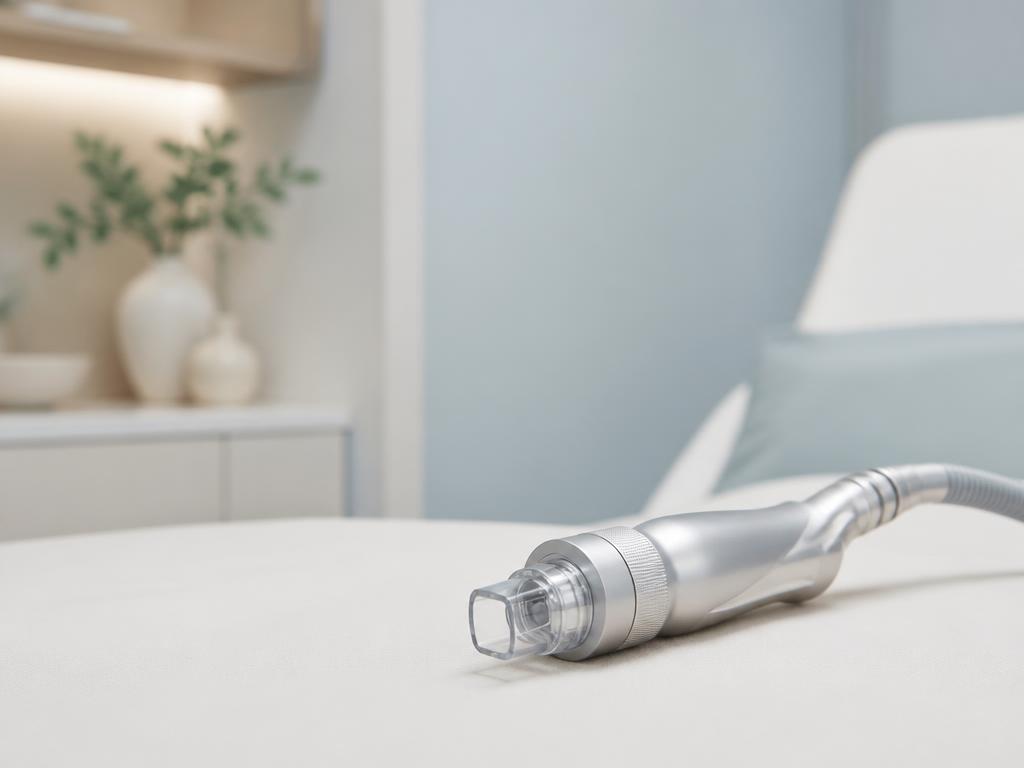
Fractional CO2 laser handpiece in a minimal clinical treatment room

The procedure

Controlled thermal injury, delivered in columns.

A CO2 laser emits energy at a wavelength absorbed by water in the skin. In fractional mode the beam is split into microscopic treatment zones, vaporising columns of tissue and leaving untreated skin between them as a reservoir for repair. In full-field ablative mode the entire surface is treated.

Both approaches work by design: the skin’s remodeling response to controlled injury is what produces the improvement in texture and tone that patients came for. The trade-off is a recovery window in which the barrier is compromised and the result is visible to everyone around them.

Why post-procedure support matters here

The days after the appointment shape how the patient remembers it.

CO2 resurfacing asks more of a patient than almost any other non-surgical treatment. They plan around it, take time away from work and social commitments, and judge the entire experience partly on how manageable that stretch felt. A well-specified aftercare regimen is as much a part of the service as the treatment itself.

It is also a clinical checkpoint: providers want patients following instructions, keeping the skin appropriately supported, and not reaching for whatever active products happen to be in the bathroom cabinet.

Typical concerns discussed

Practices commonly counsel patients about redness, sensitivity, swelling, dryness and peeling during the visible recovery window.

Barrier-first thinking

With the surface interrupted, aftercare emphasises gentle, non-irritating products and pausing routine actives until the provider says otherwise.

Sun exposure

Photoprotection guidance after resurfacing comes from the treating provider and is generally stricter than a patient's everyday routine.

Every case is different. Patients should follow the specific aftercare instructions given by their treating provider, and contact the practice with any concern about their recovery.

Where Novo Derma fits

The cosmetic recovery-support step, inside your protocol.

Novo Derma Post-Procedure Cream is a professional cosmetic product formulated to support the skin’s normal recovery process after procedures that create downtime. Providers introduce it at the point in their CO2 protocol they consider appropriate, then have the patient apply a thin layer morning and evening until the jar is empty.

It is powered by NovoSerum, a patented cell-free concentrate of naturally occurring human growth factors. Growth factors are signaling proteins that communicate with the fibroblasts involved in the skin’s normal repair and remodeling process.

  1. 01Provider completes the resurfacing treatment and sets the aftercare plan.
  2. 02Patient follows the practice's initial post-treatment instructions.
  3. 03Novo Derma is introduced at the point the provider specifies.
  4. 04A thin layer, morning and evening, until the jar is empty.
  5. 05Patient returns for follow-up as directed by the practice.

Common questions

Questions providers and patients ask

Ablative CO2 resurfacing removes columns of tissue across the epidermis and into the dermis, so the skin barrier itself is temporarily interrupted. Aftercare is therefore centred on occlusion, gentle cleansing and avoiding anything that could disturb the surface while it re-epithelialises — a much more conservative regimen than what a patient would use after a superficial treatment.

That decision belongs to the treating provider. Practices vary in whether they begin with an occlusive ointment phase before transitioning to a cream, and the depth and density of the treatment settings matter. Novo Derma is designed to be introduced at the point in the protocol your provider specifies.

It depends heavily on treatment depth, density, the area treated and the individual patient, and only the treating provider can set expectations for a specific case. Practices generally counsel patients that visible redness and peeling last longer after ablative resurfacing than after non-ablative treatments.

No. Novo Derma Post-Procedure Cream is intended to sit inside an existing provider-directed aftercare protocol as the cosmetic recovery-support step, not to replace clinical instructions, prescribed products or follow-up.

Providers use it across ablative and fractional resurfacing, at the point in recovery they judge appropriate. Because settings and depths vary widely between practices, the provider determines timing and frequency of application.

Next steps

Bring Novo Derma into your aftercare conversation.

Our representatives work with a select group of practices on use instructions, patient materials and ordering for resurfacing programs.

Book a call

More procedure aftercare